
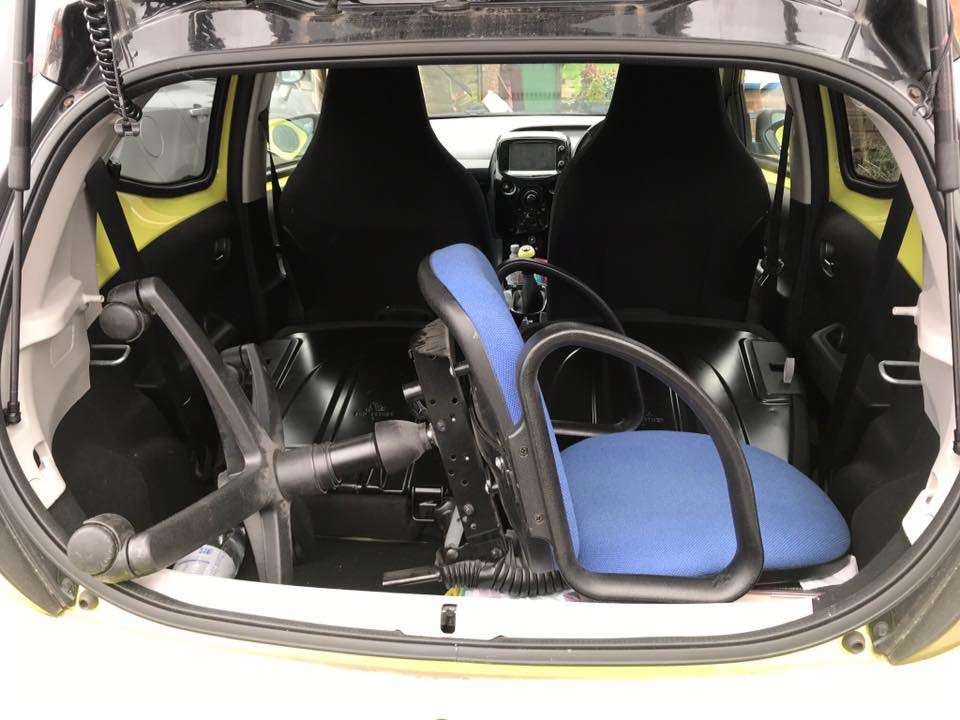
It was March 2020, and like many people I was on my first nervous day of being a remote worker, having evacuated our Burton offices for the foreseeable future. I’d set up a little workspace in my box room in anticipation, stolen a big comfy chair from the office (pictured below), and I was doing my best to embrace the change that had been thrust on me on account of the pandemic.
Day 1, sadly, was not a roaring success – I switched on my laptop to find that Google had randomly defaulted to Portuguese, and refused to negotiate. I sought some assistance from one of the more technical folks from our company, shared my screen, and left him to ponder it for an hour or two while I muddled by. Unfortunately he was not able to assist, and called me at lunchtime to suggest that it might just be quicker for me to learn Portuguese. I looked around my rubbish office and thought, haven’t I been through enough changes this week already?!
Perhaps I am just not sufficiently adaptable, I thought, although I did manage to resolve the problem in the end having learned only minimal Portuguese. I was pondering this earlier as I notice that Adaptability is a major buzz word at the moment, particularly in the fast-moving IT industry. Cloud platforms evolve monthly, automation reshapes entire workflows, and security threats never stop mutating. The professionals who thrive are those who learn fast, stay curious, and embrace change rather than resist it.
But spotting that quality at interview isn’t easy. Most candidates know adaptability is a buzzword — so they’ll all claim to have it – you might even see it on their CV in the section where they describe themselves as a ‘highly motivated team player!’ The real challenge is separating genuine flexibility from rehearsed answers.
Here are five ways to tell if someone truly adapts when things move fast.
- Ask about change they didn’t choose
Many candidates will happily describe projects where they led change — but adaptability is best revealed when change happens to them.
Try something like this:
“Tell me about a time your tools, processes, or project priorities changed suddenly. What did you do?”
Listen for signs of ownership and reflection. True adaptability sounds like:
- “At first I was frustrated, but I realised…”
- “We took a step back to understand what was driving the change…”
Rigid mindsets often show up as blame or frustration without learning.
- Dig into how they learn
Adaptable people are natural learners — they don’t wait for formal training to pick up something new.
Try asking:
“What’s the last thing you taught yourself that helped you at work?”
You’re looking for intrinsic motivation and curiosity. Genuine learners talk with enthusiasm and specifics — what they learned, why it interested them, and how they applied it. Generic answers like “I like to stay up to date with technology” are a red flag.
- Use problem-solving scenarios
Give a short, realistic technical or process challenge and ask how they’d approach it — not to test right answers, but to see how they think.
For example:
“You’ve joined a team mid-project and realise the existing network configuration isn’t scalable. How would you approach this?”
Adaptable candidates ask clarifying questions, consider different options, and weigh trade-offs aloud. Those with a fixed mindset often jump straight to a single solution or focus on what’s wrong rather than what’s possible.
- Look for patterns in their career moves
Resilience and flexibility often appear in someone’s professional history. Candidates who’ve successfully moved across industries, technologies, or company cultures often have a track record of adaptation.
Ask:
“What prompted your last couple of career changes?”
You’re listening for active decision-making and learning motivation — not just chasing titles or pay. Adaptable professionals frame moves in terms of growth: “I wanted to broaden my exposure to Azure environments,” rather than “My last company was chaotic.”
- Notice how they respond to the unexpected — even in the interview
Adaptability shows in real time. Consider asking something open-ended that doesn’t fit the usual pattern.
Candidates who stay calm, think aloud, and engage positively show comfort with uncertainty — a core indicator of adaptability. Those who become flustered or defensive may struggle in fast-changing environments.
Example questions:
“If a project you’ve been managing suddenly shifts direction or priorities, how would you ensure your team adapts effectively?”
- Reveals leadership and flexibility, not just technical skill.
“What’s something you’ve tried at work that didn’t go as planned? How did you respond?”
- Encourages reflection and demonstrates learning from failure.
“If you had to pick up a completely new tool or language this week to finish a project, how would you approach it?”
- Highlights resourcefulness and curiosity.
What to listen for overall
- Curiosity: They ask questions back. The more, the better!
- Reflection: They can explain what they learned, not just what they did.
- Energy: They speak positively about challenges.
- Self-awareness: They admit when things didn’t go perfectly.
These qualities together paint a picture of genuine flexibility — the kind that makes someone valuable in modern IT teams.
The takeaway
Technical expertise will always matter. But in an era where stacks and systems can shift overnight, adaptability is the skill that future-proofs your team.
Hiring people who can flex, learn, and lead through change doesn’t just reduce risk — it builds a culture that can handle whatever’s next.
Or as the Portuguese would say, Contratar pessoas que saibam se adaptar, aprender e liderar em meio às mudanças não apenas reduz riscos — constrói uma cultura capaz de enfrentar o que vier pela frente. (H/T to Chat GPT).